

Technology
Photoporation: a unique intracellular delivery method
Photoporation is a gentle technology that uses laser-activated nanoparticles to temporarilypermeabilize cell membranes for the delivery of biological molecules.
Upon laser irradiation,these nanoparticles generate localized physical forces that create transient membrane pores,allowing a wide variety of cargo, including mRNA, siRNA, DNA, CRISPR-Cas9 RNP complexesfor gene knockout (KO), functional proteins, and nanobodies, to enter the cytosol. This precisemechanism minimizes cellular stress, preserving the high viability and natural functionality oftreated cells for critical tasks like high-throughput screening, disease modeling, and large-scalegenetic engineering.
About intracellular delivery
What is intracellular delivery and what is it used for?
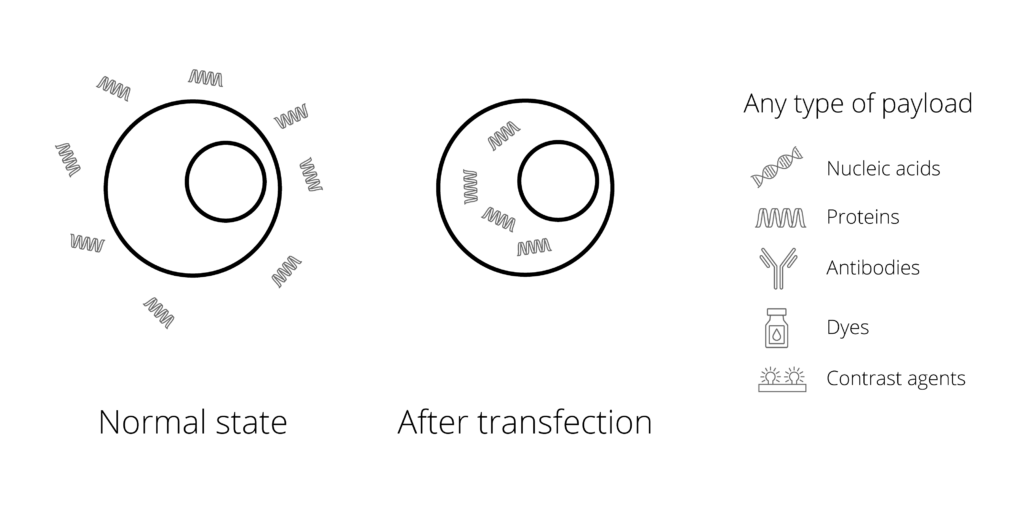
Intracellular delivery enables the introduction of biomolecules and other functional payloads,including DNA, RNA, proteins, antibodies, gene-editing complexes, oligonucleotides, peptides,and small molecules, into living cells. By overcoming the protective barrier of the cell membrane,intracellular delivery provides researchers with direct access to cellular pathways andprocesses.
This technology is widely used to investigate cellular mechanisms, modulate gene expression,develop disease models, produce recombinant proteins, and engineer cells for therapeuticapplications. Intracellular delivery is also a key enabler of high-throughput screening, functionalgenomics, and cell-based assay development, supporting applications such as CRISPR/Casgene editing, RNAi-mediated gene silencing, live-cell imaging, and advanced cell and genetherapy workflows.
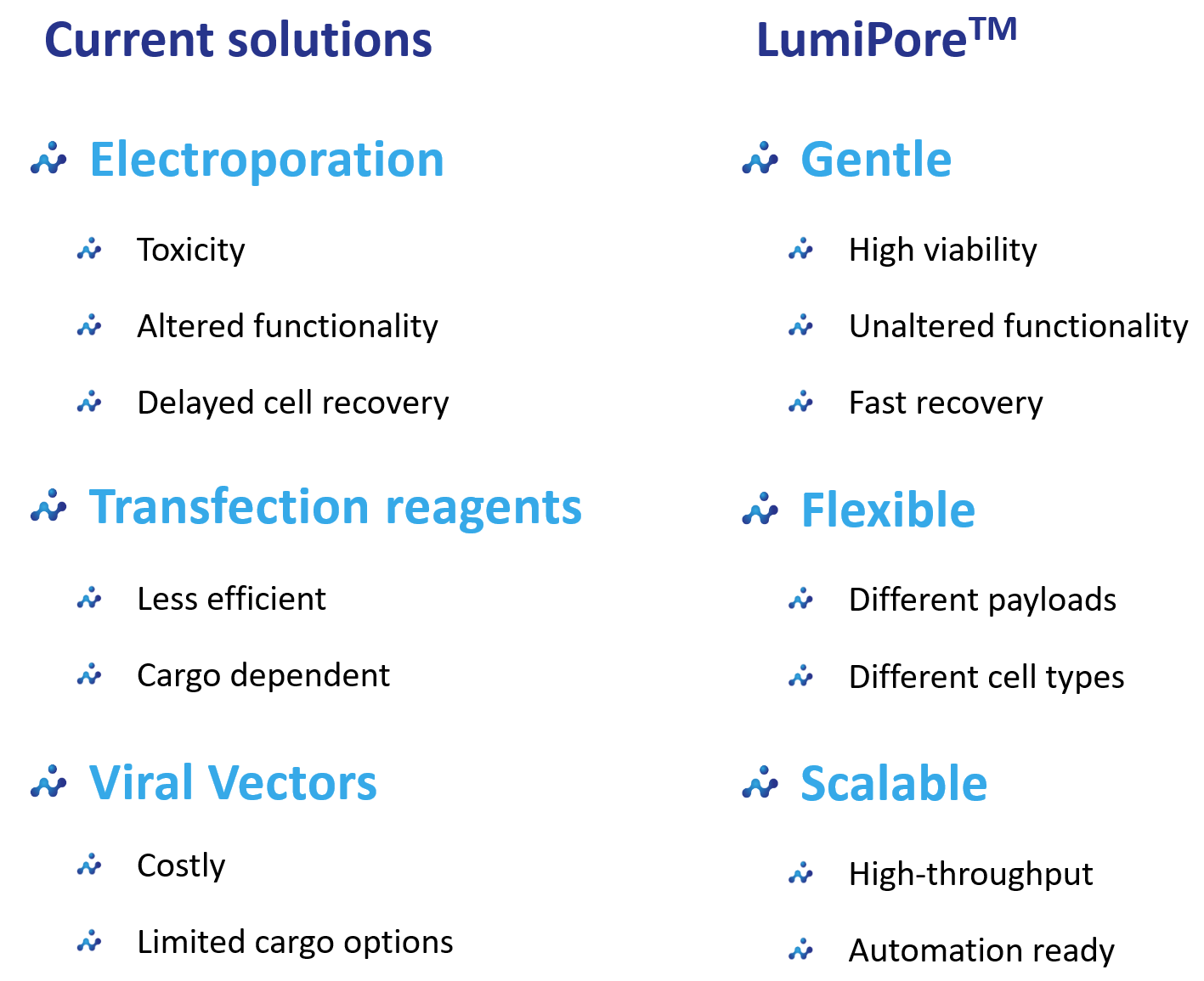
A variety of intracellular delivery technologies are available today, including electroporation,transfection reagents, and viral vectors. While each approach offers distinct advantages, theycan be associated with reduced cell viability, limited flexibility, high costs, or scalabilitychallenges. LumiPore® addresses these limitations by providing a gentle, flexible, and scalablealternative for intracellular delivery.
How does photoporation work?
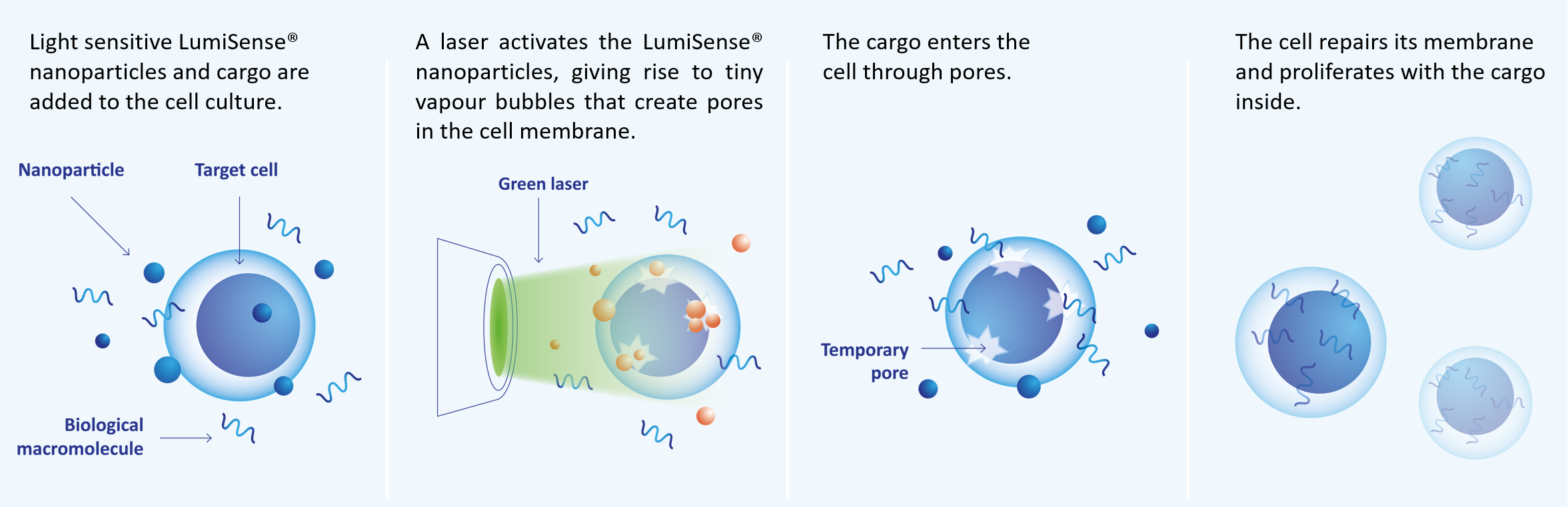
Photoporation is a simple four-step intracellular delivery process. First, LumiSense®nanoparticles and the payload of interest are added to the cells. Upon laser irradiation, thenanoparticles generate highly localized photothermal effects that create transient pores in thecell membrane. These temporary openings allow biomolecular cargo to enter the cell, afterwhich the membrane rapidly reseals. The result is efficient intracellular delivery while preservingcell viability, functionality, and proliferative capacity.
High-Throughput Transfection.Automation-Ready.
Seamless integration into your existing robotics workflows. No media exchange required. From R&D suspensions to clinical nanofiber structures.